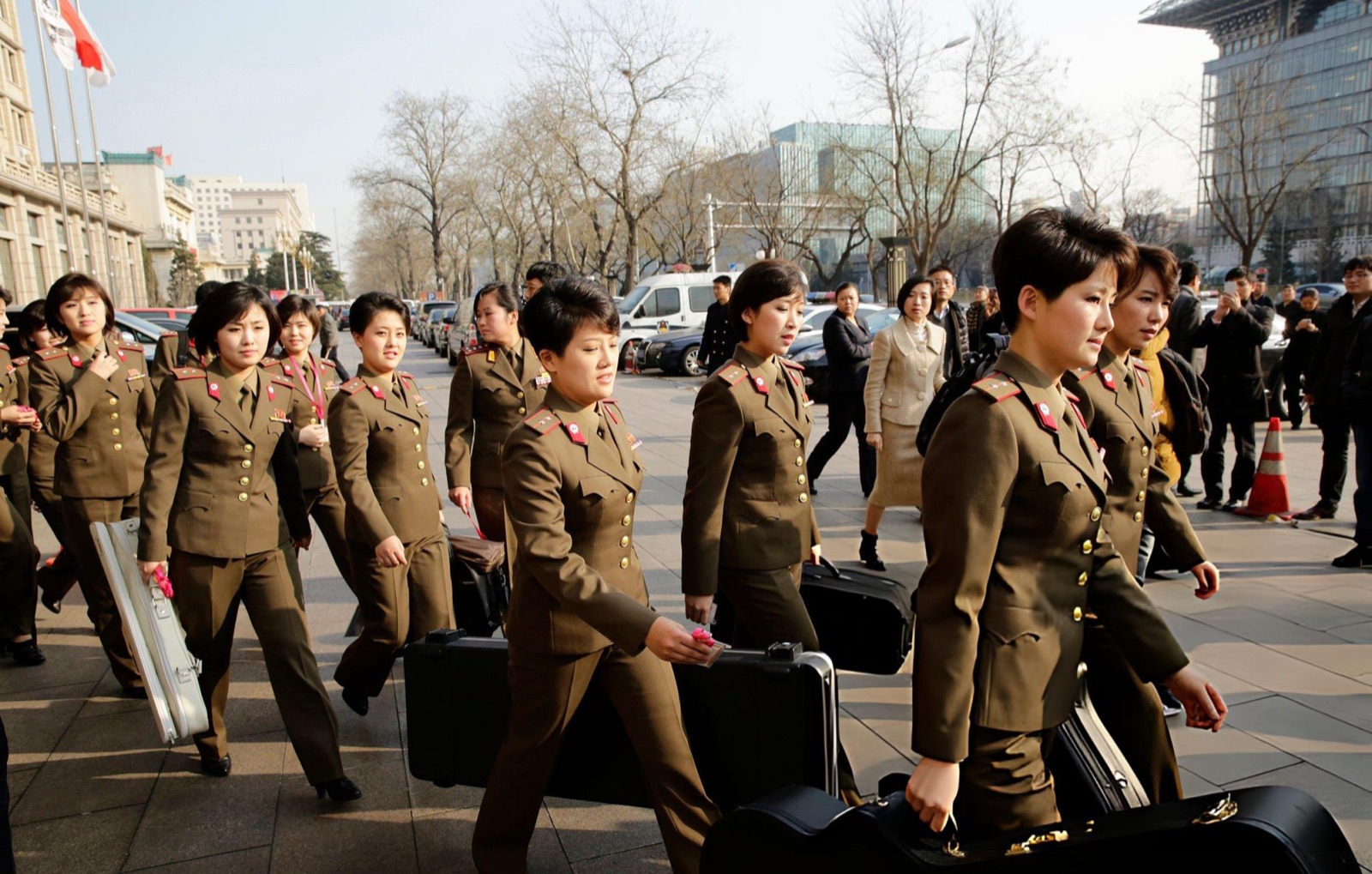
Just over a decade ago, the Moranbong Band debuted as North Korea’s dazzling new girl group, reportedly handpicked by Kim Jong Un himself. Sequined gowns, elaborate hairstyles, and glittering jewels blended North Korean patriotism with Westernized glamour. Within a year, the glitter began to fade; rumors of public executions and mysterious disappearances of members sent shockwaves through international media. By 2015, the band had traded their opulent gowns for rigid military uniforms. What drove this dramatic transformation, and how did their evolving wardrobe reflect a broader shift in North Korean culture?
The band’s 2012 debut was unlike anything North Korea had seen before. Their performances featured patriotic anthems alongside global classics like Disney medleys, accompanied by dancing Mickey and Minnie Mouse mascots. This wasn’t an act of Westernization; rather, it was a calculated move by Kim Jong Un to project a modernised image whilst appropriating globally recognised symbols as ideologically neutral. His goal was to captivate audiences without compromising the regime’s control.
“The white military uniform traces back to a concert in October 2012,” explains Peter Moody, a scholar specializing in North Korean history. “However, it did not become standardized as the signature outfit of the Moranbong Band until September 2014.” He notes that some scholars, including his co-author Seunghee Ha, hypothesize that the design drew inspiration from the South Korean girl group Girls' Generation’s Genie music video.

If true, this reinforces the notion that Moranbong was a countermeasure to the “Hallyu Wave,” a global phenomenon celebrating South Korean culture, particularly its music and fashion. This wave had infiltrated North Korea through jangmadang — informal markets where smuggled South Korean dramas and songs circulated on USBs and DVDs. Even children of elites secretly indulged in K-pop and underground nightlife. The Moranbong Band emerged as a state-approved alternative, designed to redirect cultural interests back toward the regime.
The band’s unprecedented rise made them both cultural and fashion icons. Their bold performances and Western-inspired style sparked trends among Pyongyang’s nouveau-riche, driving demand for flamboyant clothing and accessories. Yet their influence wasn’t limited to women. “In many of the concerts that are not New Year's concerts, the audience is mostly, if not exclusively, male members of the military. This suggests the concerts are a reward for loyalty or a way to motivate them by sparking adrenaline rushes and libido,” Moody notes.
Their short skirts and makeup also catered to a male gaze: “there is a fetishization of North Korean women who are entertainers for the purpose of conveying the messages of the regime in a way that makes them feel pleasurable and desirable.”
By late 2014, Moranbong had become both a sensation and a liability. Members began vanishing, igniting rumors of purges and public executions — claims amplified by South Korean media but ultimately dismissed as propaganda. The more plausible explanation was that their rising fame, combined with their flirtation with global pop trends, posed a threat to the regime’s ideological grip. For a government that views culture as a propaganda tool, the band’s growing power was a threat to the regime.
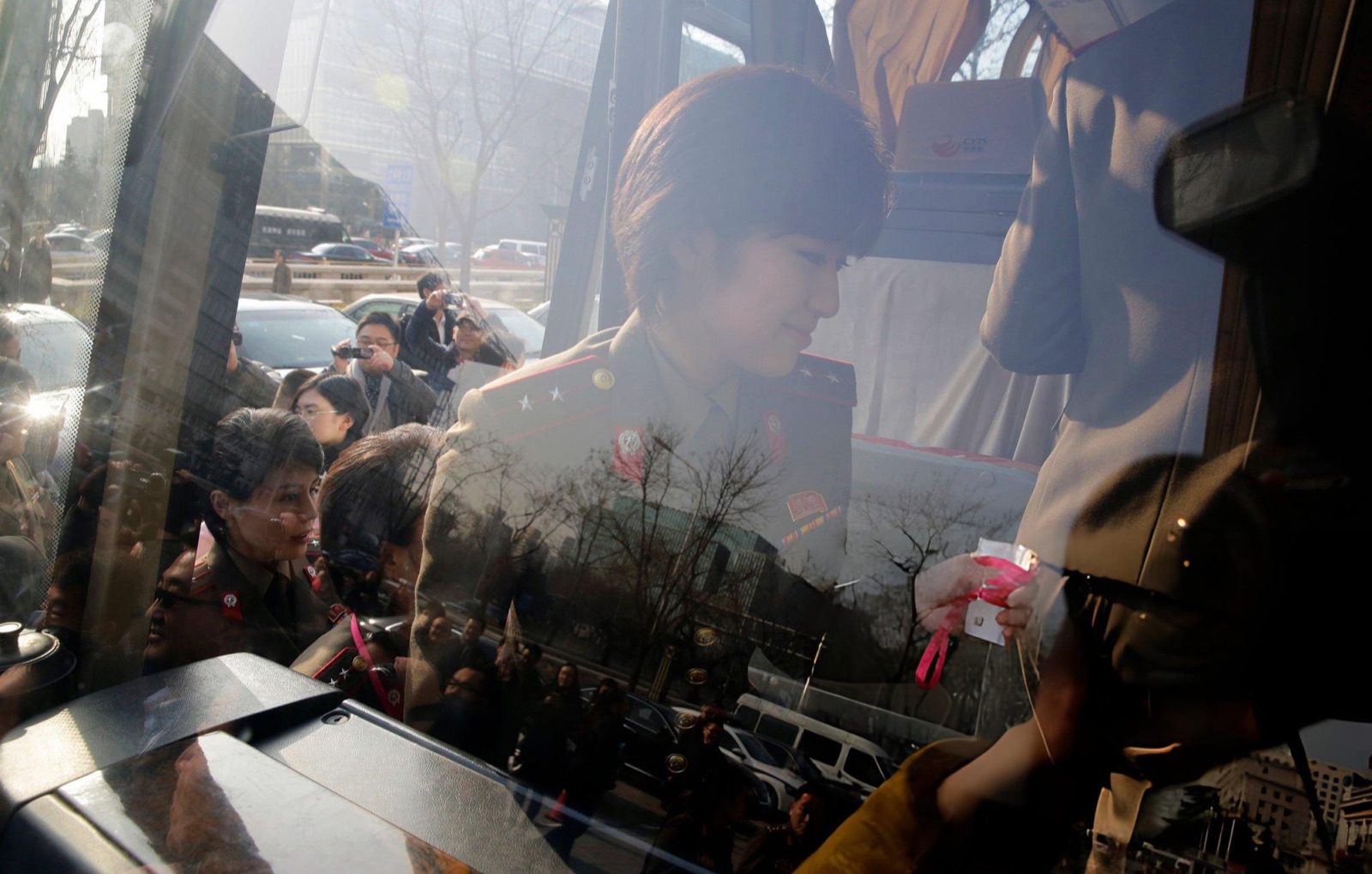
This tension reached a climax in 2015 when the band traveled to Beijing for a high-profile concert meant to strengthen diplomatic ties. Their arrival in “socialist chic” outfits — military-style winter coats and furry hats — drew comparisons to the Spice Girls but also mockery, with nicknames in UK media like “Famine Spice” highlighting the global fixation on North Korea’s oppressive image. The concert was abruptly canceled at the last minute, with no official explanation. Speculation ranged from diplomatic tensions to internal concerns over the band’s rising autonomy.
When Moranbong reemerged later that year, their glittering gowns were gone. They now performed in standardized white military uniforms, their choreography emphasising rigid synchronization. Lyrics praising Kim Jong Un replaced earlier medleys, and their image became unmistakably militarised. There was also an emergence of rival groups like the Chongbong Band during this time, highlighting the regime’s efforts to reorganize cultural production, sending a blatant message: Moranbong — and its members — were expendable.
The Moranbong Band’s evolution illustrates North Korea’s struggle to modernise propaganda without ceding ideological control. Whilst their early performances mirrored the glamour of global pop groups, their militarised transition signaled an abrupt shift away from cultural experimentation. Post-2020, the band’s appeal shifted away from youth culture to a more family-friendly focus. “Since the music sector backtracked, somewhat, from revealing outfits and girl group ensembles to a more family-friendly atmosphere during and after 2020, we can assume that this DPRK state-mediated popular culture was not entirely having the effect that was intended,” Moody observes.
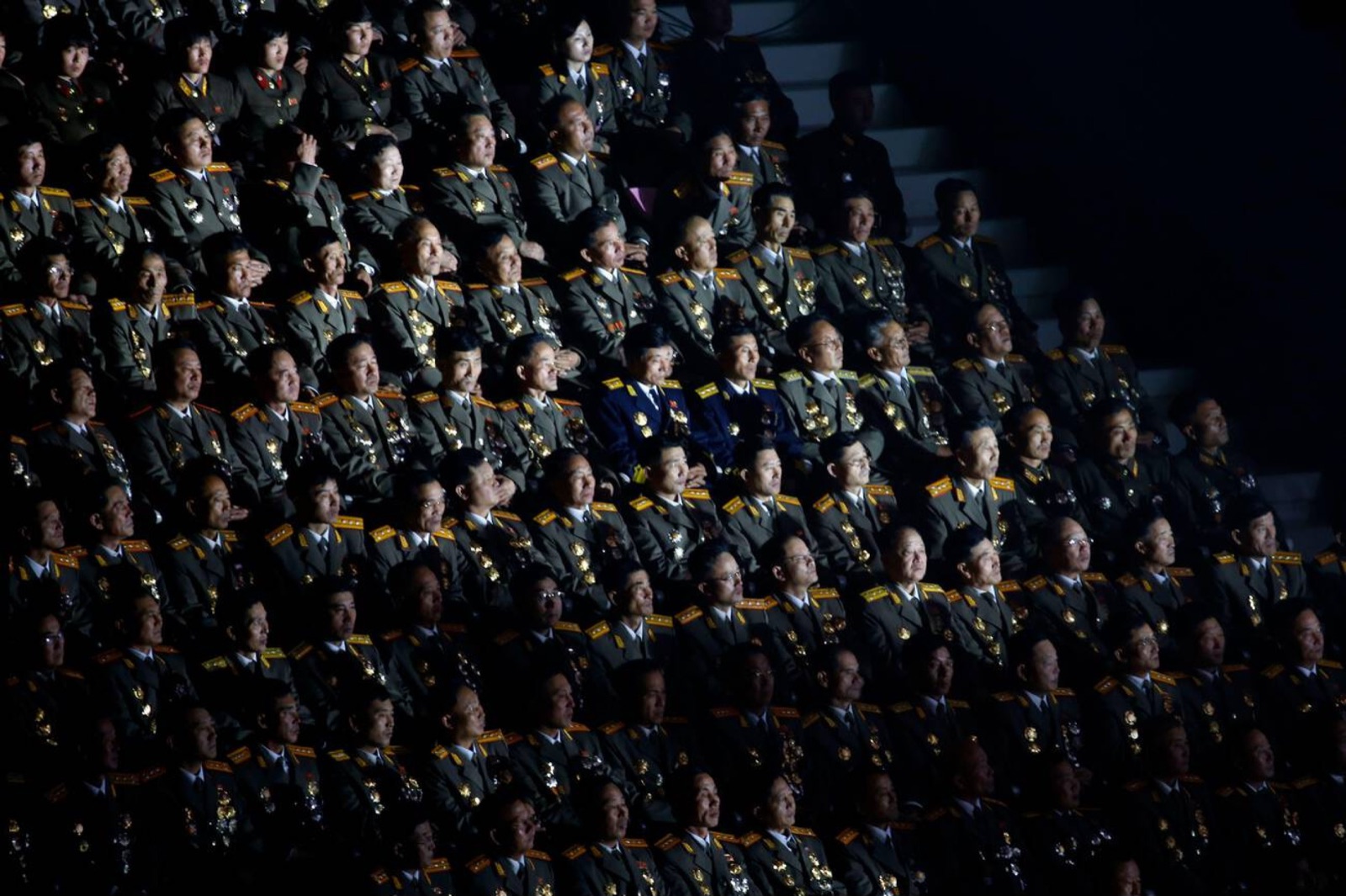
In the end, the Moranbong Band is a glittering tragedy — a fleeting experiment extinguished by authoritarian control. Their rise to stardom reflected North Korea’s attempt to harness modern culture for propaganda, but their militant transformation revealed a system that cannot even tolerate state-approved individuality. For a brief moment, the band symbolised innovation and modernity, but in North Korea, no star can shine brighter than the state.